Humphrey Bogart: Casablanca
Gary Cooper: For Whom the Bell Tolls
Mickey Rooney: The Human Comedy
Walter Pidgeon: Madame Curie
Paul Lukas: Watch on the Rhine (winner)
What’s Missing
There are some very interesting possibilities with Best Actor 1943. As usual, it’s a race where there are a couple of solid contenders and a number of also-rans who don’t belong. And, naturally, there are some real snubs. We’re going to start with one I think is worth mentioning even though I don’t like the film: Don Ameche in Heaven Can Wait. It’s also incredibly surprising to me to give praise to the bland Franchot Tone, but I really like him in Five Graves to Cairo. There are three who genuinely belong here and who I can’t understand being left off. The first is Henry Fonda for The Ox-Bow Incident. The Life and Death of Colonel Blimp was oddly received for this middle-of-the-war year, but Roger Livesey deserved a lot more credit than he ever received for it. The biggest miss, though, was Joseph Cotton in Shadow of a Doubt. His role as a villain may have prevented the nomination, but the fact that he was skunked for his career is something Oscar will have to life with.
Weeding through the Nominees
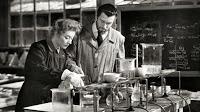
5. I like Walter Pidgeon as an actor, but I can’t understand why his performance for Madame Curie is here. He had great chemistry (no pun) with Greer Garson, and he’s fine in the role here, but this is absolutely Garson’s film. Her power over the role and the narrative makes him feel supporting at best. The story is a good one, and it’s well told, and it’s undeniable that Walter Pidgeon is a part of that, but there’s no good reason he should be here. It’s a shame, because it’s not close to me least-favorite performance or movie here.
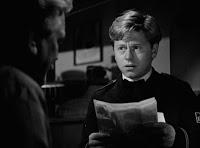
4. Mickey Rooney’s nomination for The Human Comedy is another one that doesn’t quite feel earned. Again, there’s nothing wrong with it. Rooney was a likeable actor in most of what he did, and Homer Macauley is a likeable character. The story doesn’t really go anywhere or have much to say, though. It’s almost painfully idealized, and because of that, Rooney doesn’t really have to do much. He’s able to get by in the film by simply being himself. Worth a nomination? Not really.
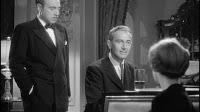
3. Paul Lukas was your winner here, and I’m not exactly sure what I have to say about that. It says something about the previous two that I’m putting them below Lukas. The problem here is that I don’t remember a great deal of this film or of Lukas specifically, and that doesn’t bode well. Watch on the Rhine has an excitement problem, and that’s a real issue for a movie that is essentially about people fleeing the Third Reich. While I can’t place all of the blame on Lukas, he has to get some. It feels like this won for the role and the situation, not the performance.
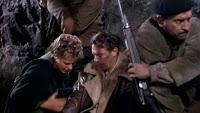
2. This puts me with Gary Cooper and For Whom the Bell Tolls in the first runner-up position. And here’s the thing: I’m going to be predisposed to liking a Gary Cooper performance in general, and this is a good one. Even in the weakest of years, though, it’s unlikely that Cooper is going to get the nod from me. The reason for that is simple: Katina Paxinou dominates every scene she is in. She single-handedly forced me to reevaluate the position I have on Hemingway’s women characters, a position I had held since my undergraduate days. Cooper can’t compete with that.
My Choice
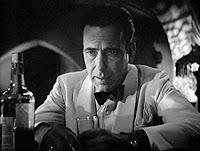
1. Is there a shock here? I’ve said in the past that Casablanca is, in my opinion, the best of the Best Picture winners, and there is no Casablanca without the equal parts tough and tender performance of Humphrey Bogart. I think we could probably talk about Roger Livesey here and we could absolutely discuss Joseph Cotten as being deserving of this Oscar and I wouldn’t disagree with either of those positions. But Bogart is iconic in this role and always will be. When you have someone who cannot be separated from the performance, it’s hard to go elsewhere.
Final Analysis