


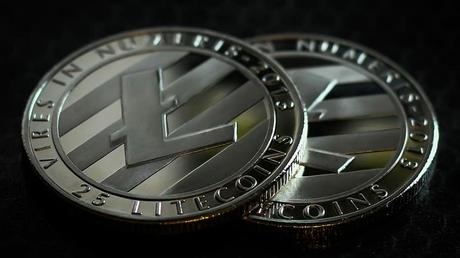
As Ordinals inscriptions have been added to Litecoin, there is now a race to add NFTs to more proof-of-work blockchains.
Ordinal Inscriptions and the ability to mint content other than transactions on the Bitcoin network have taken the blockchain by storm. According to Dune analytics, more than 154,000 inscriptions have been created. Now, a developer has modified the Ordinals project for Litecoin, an alternative proof-of-work blockchain.
Litecoin, which came out in 2011, is a peer-to-peer cryptocurrency that was made to process transactions faster than Bitcoin. Charlie Lee, who used to work at Google and made Litecoin, sold all of his Litecoin in 2017 to avoid any possible conflicts of interest.
Indigo Nakamoto, a pseudonymous Twitter user, offered 5 LTC (about $500) to anyone who could successfully move Ordinals to the Litecoin blockchain on February 10.
————tweet————
Anthony Guerrera, a software engineer, started the Litecoin Ordinals project on GitHub on Sunday. He did this after forking the GitHub repository for Bitcoin Ordinals posted by Casey Rodarmor in January.
Guerrera said that Litecoin was chosen because it is the only other blockchain that Ordinals could work on. This is because it has soft forks of the SegWit and Taproot technology found in Bitcoin, which are both necessary for Ordinals to work.
“Basically, I was motivated by the bounty that Indigo and a few others put out for someone to port Ordinals to Litecoin,” Guerrera told Decrypt via Twitter DM. “I approached Indigo about a week ago to step up to the challenge.”
Guerrera says that the reward for moving Ordinals to Litecoin went from 5 LTC to 22 LTC, which is about $2100.
————–tweet—————-
Guerrera says that when he started working on the project, he found problems with how it depended on rust-bitcoin, which did not support the MimbleWimble upgrade on Litecoin.
Rust is a programming language that was made to be safe and fast. The cryptocurrency exchange Kraken started the internal Tamás Blummer Memorial Fund in September 2021 to support the development of rust.
“I forked rust-bitcoin to make one that is able to work with Litecoin MWEB,” Guerrera said. “[This allows] Ordinals to decode the block data and safely ignore the extension block MWEB.”
MimbleWimble, a Litecoin blockchain upgrade introduced in May 2022, seeks to improve the network’s privacy and transaction size.
With MimbleWimble as its secret sauce, Guerrera says that the Litecoin blockchain is ideal for Ordinals because it can manage more data per transaction at a cheaper cost than Bitcoin.
“Having MWEB built into the chain allows for users to be able to transfer funds privately before inscribing,” he said. “For example, a statement piece while maintaining privacy; is a huge advantage, unlike Bitcoin, which is a fully public ledger.”
According to CoinGecko, Litecoin is the 16 largest cryptocurrency by market capitalization, with $6.89 billion.
Content Source: decrypt.com






