 In 2015, the British government was forced to pay £8.8 million to
Taylor & Sons when the Welsh engineering firm went into liquidation, and in
so doing, laid off its 250-person team. On the surface, that might sound weird.
After all, why would a government pay out a seven-figure sum to a midsize firm
that went bankrupt?A
company is a legal entity formed by a group of individuals to engage in and operate
a business—commercial or industrial—enterprise. A company may be organized in
various ways for tax and financial liability purposes depending on the
corporate law of its jurisdiction. The line of business the company is in will
generally determine which business structure it chooses such as a partnership,
proprietorship, or corporation. These structures also denote the ownership
structure of the company. They can also be distinguished between private and
public companies. Both have different ownership structures, regulations, and
financial reporting requirements.By
another definition, a Company is any
formal business entity for profit which may be a corporation, a partnership,
association or individual proprietorship. Often people think the term "company"
means the business is incorporated, but that is not true. In fact, a
corporation usually must use some term in its name such as
"corporation," "incorporated," "corp." or
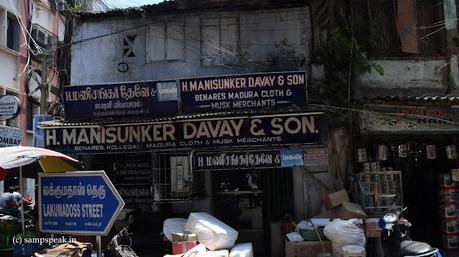
"inc." to show it is a corporation. Often you find – many a firms – with suffix ‘& sons’ - It means that campany was started by a
family, which has generations involved in same business. The family can still
be the sole or majority share holder in the company. The story of Taylor & Sons’ big payout began in 2009, after
the government’s official registrar for all companies in the U.K., Companies
House, mistook Taylor & Sons — at
that point, a flourishing firm that had been operating for 134 years — with Taylor & Son
Limited, a body shop based in Manchester, which had reported plans to shut
down. The mix-up meant the British government had shut down all of Taylor &
Sons accounts, bank transactions and U.K.-based trusts. Contracts were lost,
staff didn’t get paid and the firm’s credit agreements with suppliers were no
longer valid. And so, by the end of 2009, Taylor & Sons (the engineering
firm) was forced to shut down for good.After a six-year court battle, Taylor & Sons owner Philip
Davison-Sebry won the payout for irreparable damages in London’s high court.
(He’s currently using that money to start a new firm.) For its part, the
British government still blames the incident on a clerical error, part of which
it attributes to the large number of businesses in the U.K. that have some
variation of the “& Son(s)” suffix in their names.
In 2015, the British government was forced to pay £8.8 million to
Taylor & Sons when the Welsh engineering firm went into liquidation, and in
so doing, laid off its 250-person team. On the surface, that might sound weird.
After all, why would a government pay out a seven-figure sum to a midsize firm
that went bankrupt?A
company is a legal entity formed by a group of individuals to engage in and operate
a business—commercial or industrial—enterprise. A company may be organized in
various ways for tax and financial liability purposes depending on the
corporate law of its jurisdiction. The line of business the company is in will
generally determine which business structure it chooses such as a partnership,
proprietorship, or corporation. These structures also denote the ownership
structure of the company. They can also be distinguished between private and
public companies. Both have different ownership structures, regulations, and
financial reporting requirements.By
another definition, a Company is any
formal business entity for profit which may be a corporation, a partnership,
association or individual proprietorship. Often people think the term "company"
means the business is incorporated, but that is not true. In fact, a
corporation usually must use some term in its name such as
"corporation," "incorporated," "corp." or
"inc." to show it is a corporation. Often you find – many a firms – with suffix ‘& sons’ - It means that campany was started by a
family, which has generations involved in same business. The family can still
be the sole or majority share holder in the company. The story of Taylor & Sons’ big payout began in 2009, after
the government’s official registrar for all companies in the U.K., Companies
House, mistook Taylor & Sons — at
that point, a flourishing firm that had been operating for 134 years — with Taylor & Son
Limited, a body shop based in Manchester, which had reported plans to shut
down. The mix-up meant the British government had shut down all of Taylor &
Sons accounts, bank transactions and U.K.-based trusts. Contracts were lost,
staff didn’t get paid and the firm’s credit agreements with suppliers were no
longer valid. And so, by the end of 2009, Taylor & Sons (the engineering
firm) was forced to shut down for good.After a six-year court battle, Taylor & Sons owner Philip
Davison-Sebry won the payout for irreparable damages in London’s high court.
(He’s currently using that money to start a new firm.) For its part, the
British government still blames the incident on a clerical error, part of which
it attributes to the large number of businesses in the U.K. that have some
variation of the “& Son(s)” suffix in their names.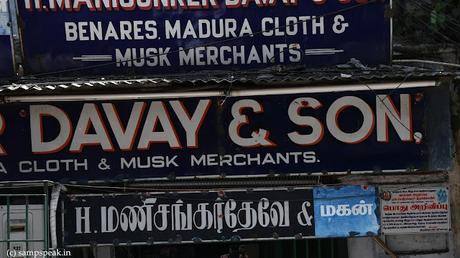 ..
.. .. all this long post – for this board attracted me – in a literal
translation – ‘& sons’ has become ‘magan’ written in Tamil. Interesting !With regards – S. Sampathkumar29.4.2022
..
.. .. all this long post – for this board attracted me – in a literal
translation – ‘& sons’ has become ‘magan’ written in Tamil. Interesting !With regards – S. Sampathkumar29.4.2022