


Grace Thoughts
Teaching Ephesians – The Gospel of Your Salvation (Part 14)
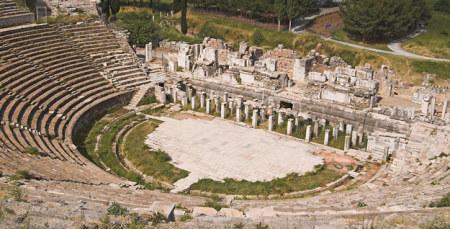
Courtesy of D. Osseman library
" data-orig-size="450,229" sizes="(max-width: 450px) 100vw, 450px" data-image-title="Ephesus Great Theater" class="attachment-rowling-post-image size-rowling-post-image wp-post-image" data-orig-file="https://gracelifethoughts.files.wordpress.com/2019/03/ephesus-great-theater.jpg" data-image-description="" height="229" width="450" data-medium-file="https://gracelifethoughts.files.wordpress.com/2019/03/ephesus-great-theater.jpg?w=300" data-permalink="https://gracelifethoughts.com/2019/04/25/teaching-ephesians-the-gospel-of-your-salvation-introduction/ephesus-great-theater/" alt="" decoding="async" srcset="https://gracelifethoughts.files.wordpress.com/2019/03/ephesus-great-theater.jpg 450w, https://gracelifethoughts.files.wordpress.com/2019/03/ephesus-great-theater.jpg?w=150 150w, https://gracelifethoughts.files.wordpress.com/2019/03/ephesus-great-theater.jpg?w=300 300w" data-image-meta="{"aperture":"0","credit":"","camera":"","caption":"","created_timestamp":"0","copyright":"","focal_length":"0","iso":"0","shutter_speed":"0","title":"","orientation":"0"}" data-large-file="https://gracelifethoughts.files.wordpress.com/2019/03/ephesus-great-theater.jpg?w=450" />Courtesy of D. Osseman library
We are sharing a special series about teaching the Book of Ephesians in small groups. If you haven’t read the Introduction to the series, we invite you to read it here.
Whether you are interested in studying Ephesians for the purpose of teaching it to small groups or for your own personal study, we believe you will find this series helpful.
Basic Premises for Studying Scripture
- God is worth knowing
- His Word is worth learning and obeying
- Because God is worth knowing and His Word is worth learning, we will follow a proven method of knowing Him and learning His Word.
- We will use the I – M – D – I method of Bible study:
- Inductive – Methodical – Direct – Independent
- Inductive study – “logical, objective, impartial reasoning” … examining specifics of Scripture before reaching conclusions
- Methodical study – “a way or path of transit” (Greek – methodos) … focused on taking the proper path to gaining knowledge about God
- Direct study – “relying on Scripture as the primary tool for learning”
- Independent study – “original thinking combined with Spirit insight”
- Observe (See and Record)
- Question (Ask and Answer)
- Interpret (Determine the Holy Spirit’s Intent)
- Apply (How God’s Truth applies to your life)
Bible Study – The Group Process
We invite you to model the process of observing, asking questions for interpretation, interpreting for meaning, and applying for discipleship for your small group. This process may be new to some of the people in your group, so going through it with them for awhile may help them feel comfortable with how to do it.
One of the biggest mistakes people make in reading the Bible is trying to interpret the meaning of individual verses before observing everything in the verses. Studying in context also helps keep us from making incorrect interpretations. That means starting the observation process at the beginning of each Bible book.
The challenge in studying alone or with the group is trying to determine the meaning of passages in the Bible before assuring that we’ve observed everything in the passages and asked every possible question. We carefully answer all of the questions before reaching a conclusion to the meaning.
Read the Scripture and go through each step with your group. You may be able to cover observation,questions, interpretation and application in one meeting, but don’t rush the process. It takes time to see everything in a text, ask good questions, get good answers to those good questions, interpret the meaning of the text and apply the meaning to life. If it takes two or three meetings to do that for each text, that’s fine! The goal is to rightly divide God’s Word, not finish by a certain date.
Observe – Write what you see
Ephesians 3:4-7
… by which, when you read, you may understand my knowledge in the mystery of Christ), which in other ages was not made known to the sons of men, as it has now been revealed by the Spirit to His holy apostles and prophets: that the Gentiles should be fellow heirs, of the same body, and partakers of His promise in Christ through the gospel, of which I became a minister according to the gift of the grace of God given to me by the effective working of His power.
In the last part of our study (Ephesians 3:1-3), the Apostle Paul went into more depth about the “dispensation of the grace of God.” Paul mentioned this special “household management” in the first chapter of his letter to the Ephesians: “that in the dispensation of the fullness of the times He might gather together in one all things in Christ, both which are in heaven and which are on earth—in Him (Ephesians 1:10).
As Paul explained in the second chapter of his letter, Gentiles had been “aliens from the commonwealth of Israel and strangers from the covenants of promise.” They had “no hope” and were “without God in the world.” It was because of God’s dispensation of Grace that Gentiles “who once were far off” had “been brought near by the blood of Christ.” That’s what makes the Dispensation of the Grace of God so special. God determined before time began that He would eventually save Gentiles in the same way He saved Jews. Gentiles had an equal place in God’s family under Paul’s preaching. They were “no longer strangers and foreigners, but fellow citizens with the saints and members of the household of God.”
Ephesians 3:4-7 in Greek
by which, when you read, you may understand my knowledge in the mystery of Christ) … προς ο δυνασθε αναγινωσκοντες νοησαι την συνεσιν μου εν τω μυστηριω του χριστου
Paul’s presentation about the revelation of the mystery that Jesus had given him continued in verse 4 … pros ho dynasthe is “by which you are able” … dunasthe means “to be able, to have power” … the Ephesians had the ability to understand Paul’s knowledge in the mystery of Christ and so do we … we have plenty of evidence in Ephesians and other letters from Paul to grasp this truth … Paul said they could “understand” his “knowledge” in the mystery … the word “understand” is noēsai and means “to perceive, think, apply mental effort to reach a conclusion” … the word “knowledge” is sunesin and means “insight, a putting together in the mind” … the word “mystery” is mustēriō, which Paul used six times in his letter to the Ephesians …
- mystery of His will — “having made known to us the mystery of His will” 1:9
- the mystery — “how that by revelation He made known to me the mystery” 3:3
- mystery of Christ — “by which, when you read, you may understand my knowledge in the mystery of Christ” 3:4
- fellowship of the mystery — “and to make all see what is the fellowship of the mystery 3:9
- great mystery — “This is a great mystery” 5:32
- mystery of the gospel — “that I may open my mouth boldly to make known the mystery of the gospel” 6:19
In 1 Corinthians, Paul wrote about the mysteries of God — “Let a man so consider us, as servants of Christ and stewards of the mysteries of God” (1 Corinthians 4:1). Being a “steward” of the mysteries of God means being “a household manager” (oikonomous) of the mysteries (mustēriōn) of God. Paul was asking the Corinthians to consider him as a household manager (overseer) of God’s mysteries that Jesus had given him.
Colossians is a companion letter of Ephesians, meaning the same author wrote both letters about the same time and included similar information. It’s helpful to read Ephesians and Colossians together to see how Paul explained similar doctrines to two different churches. Paul mentioned the mystery four times in Colossians:
- “the mystery which has been hidden from ages and from generations, but now has been revealed to His saints.” 1:26
- “To them God willed to make known what are the riches of the glory of this mystery among the Gentiles: which is Christ in you, the hope of glory.” 1:27
- “that their hearts may be encouraged, being knit together in love, and attaining to all riches of the full assurance of understanding, to the knowledge of the mystery of God.” 2:2
- “to speak the mystery of Christ” 4:3
Paul wrote Timothy about the “mystery of the faith” (1 Timothy 3:9) and the “mystery of godliness” (1 Timothy 3:16).
Paul wrote the Thessalonians about the “mystery of lawlessness” (2 Thessalonians 2:7).
Paul wrote the Romans about the “revelation of the mystery kept secret since the world began” (Romans 16:25).
The Gospel writers quoted Jesus as using the phrase “mystery of the kingdom” or “mysteries of the kingdom.” (e.g. Matthew 13:11; Mark 4:11; Luke 8:10) to explain to His disciples that it was given to them to know the mysteries of the kingdom of God, “but to the rest it is given in parables, that ‘Seeing they may not see, And hearing they may not understand.”
Jesus told the Apostle John to write about the “mystery of the seven stars” (Revelation 1:20). Jesus explained that the “seven stars” are the “angels of the seven churches” (Revelation 1:21).
As we study the context of each of the 28 uses of the word mustérion, we see that Paul referenced a particular secret that God had given him to give to the world of Gentiles and Jews. Even the other apostles (e.g. Peter, James, John) did not know about the details of that mystery until Paul revealed it to them (e.g. Acts 15; Galatians 2). The apostles knew about the mystery of the kingdom of God as Jesus revealed it to them. God did give Peter some insight through visions and the salvation of God-fearing Gentiles (Acts 10 – 11:18), but even Peter did not know the full details of the mystery Jesus had given Paul until the Jerusalem Council (Acts 15; Galatians 2). Paul knew about a great mystery, the mystery of Christ, as revealed to him by Jesus. Paul explained that in the next verse.
which in other ages was not made known to the sons of men, as it has now been revealed by the Spirit to His holy apostles and prophets … ο εν ετεραις γενεαις ουκ εγνωρισθη τοις υιοις των ανθρωπων ως νυν απεκαλυφθη τοις αγιοις αποστολοις αυτου και προφηταις εν πνευματι
The words “in other ages” are heterais geneais, “other generations, other families, other ages.” The mystery Paul revealed was “not made known to the sons of men” in previous generations. Look through the Old Testament writings and you won’t find the particular mystery God revealed to Paul. The prophets mentioned in Ephesians 3 refers to the prophets of the 1st century AD, not the BC prophets (before Christ). The Holy Spirit revealed the mystery of Christ among the Gentiles to the Apostle Paul, who then revealed it to the other apostles and prophets.
that the Gentiles should be fellow heirs, of the same body, and partakers of His promise in Christ through the gospel … ειναι τα εθνη συγκληρονομα και συσσωμα και συμμετοχα της επαγγελιας αυτου εν τω χριστω δια του ευαγγελιου
This is similar to what Paul wrote the Colossians about the mystery God had given him to reveal to the world — “the riches of the glory of this mystery among the Gentiles: which is Christ in you, the hope of glory” (Colossians 1:27). In his letter to the Ephesians, Paul explained this mystery as the Gentiles being “fellow heirs,” “of the same body,” “and partakers of His promise in Christ through the gospel.”
The words “fellow heirs” are a translation of the Greek word sunklēronoma (co-inheritor, joint heir). It hearkens back to what Paul wrote earlier in Ephesians about a particular relationship the Gentiles had with Jews as receiving the same inheritance: Ephesians 1:11, 14, 18. Paul also used the word sunklēronoma in his letter to the Romans (8:17).
Gentiles are fellow heirs “of the same body.” The Greek word is sussōma and means “joint body, belonging to same body, united in same body.” That is another way of saying what Paul wrote in Ephesians 2:
For He Himself is our peace, who has made both one, and has broken down the middle wall of separation, having abolished in His flesh the enmity, that is, the law of commandments contained in ordinances, so as to create in Himself one new man from the two, thus making peace, and that He might reconcile them both to God in one body through the cross, thereby putting to death the enmity. And He came and preached peace to you who were afar off and to those who were near. For through Him we both have access by one Spirit to the Father.
Ephesians 2:14-18
Gentiles are also “partakers of His promise.” The Greek words are summetocha tēs epangelias (joint partakers, fellow partakers of the officially sanctioned promise). Paul wrote about this promise earlier in his letter. Gentiles had been “aliens from the commonwealth of Israel and strangers from the covenants of promise, having no hope and without God in the world” (2:12), but in Christ they were “joint parkers” with believing Jews of the promise of God and sealed for eternity — “in whom also, having believed, you were sealed with the Holy Spirit of promise” (1:13). Gentiles and Jews would together receive “every spiritual blessing in the heavenly places in Christ” (1:3).
That is the mystery God gave Paul to manage “in Christ through the gospel.”
It is well to pause over a passage like this, and reflect that what seems now to be an axiom of religious thought, the equality of mankind in view of the offer of salvation, was once an immense and long-withheld discovery.
Cambridge Bible for Schools and Colleges
of which I became a minister according to the gift of the grace of God given to me by the effective working of His power … ου εγενομην διακονος κατα την δωρεαν της χαριτος του θεου την δοθεισαν μοι κατα την ενεργειαν της δυναμεως αυτου
God made Paul a “minister” (diakonos, servant) of the mystery according to (kata, down from, by way of) “the gift of the grace” (dōrean tēs charitos, free gift of the favor, kindness) of God. Paul understood well why God had given him the responsibility of managing the household of the mystery of Christ. It was because of God’s free gift of grace.
This ministry, Paul wrote, was given to him “by the effective working” (energeian, productive work, energetic activity, divine energy) of God’s “power” (dunameōs, strength, might, power, ability to perform). Paul understood that God was the one able to accomplish the great work He had given Paul to do. Paul did not do what he did in his own power, but in the power of Almighty God. God’s grace and power were demonstrated in Paul’s ministry.
“No man can make himself a minister (lit. servant) of God, because the calling, message, work, and empowering of genuine ministry to and for God are His prerogative alone to give.”
The McArthur Study Bible, 2nd Edition, Thomas Nelson, 2019, p 1648)
Observe – Write what you see
… by which, when you read, you may understand my knowledge in the mystery of Christ), which in other ages was not made known to the sons of men, as it has now been revealed by the Spirit to His holy apostles and prophets: that the Gentiles should be fellow heirs, of the same body, and partakers of His promise in Christ through the gospel, of which I became a minister according to the gift of the grace of God given to me by the effective working of His power.
EPHESIANS 3:4-7
1.
2.
3.
4.
5.
6.
7.
8.
9.
10.
11.
12.
13.
14.
15.
16.
Question – Ask and answer questions based on observations
1.
2.
3.
4.
5.
6.
7.
8.
9.
10.
11.
12.
13.
14.
15.
16.
17.
18.
19.
Interpret – What is the Holy Spirit’s intent in these verses?
:
:
:
:
:
:
Apply – How can you apply these spiritual truths to your life?
:
:
:
:
:
Next Time
We will look at Ephesians 3:8-9 in the next part of our series, Teaching Ephesians.
Scripture taken from the New King James Version®. Copyright © 1982 by Thomas Nelson. Used by permission. All rights reserved.
GraceLife © 1990-2023
 Apostle PaulBook of EphesiansJesus ChristMysteryTeaching Ephesians

Published by gracelifethoughts
Founder & Director of GraceLife Ministries View all posts by gracelifethoughts






