


 At a recent Castilla y León Roadshow event, I saw Albarin Blanco on the tasting sheet for Leyenda Del Páramo and thought "Nice, Albariño has a synonym in Castilla y León". Was I wrong. In reality, Albarin Blanco is a rare light-skinned grape variety found only in northwestern Spain -- Castilla y León, Asturias and even Galicia. Wine-searcher.com provides descriptors where "the aroma profile of Albarín Blanco wines falls somewhere between that of its cousin Albariño and that of Gewürztraminer. Tasting notes often include references to ripe limes, lychee, mint, fig and orange."
 Castilla y León is located in northwestern Spain between Galicia & Portugal and Rioja and is that country's largest wine-producing region -- encompassing 6% of Spain's total production. It is also the 4th largest Spanish grape growing region and home to over 500 wineries. The region contains 14 Designations of Origin (D.O.), four Protected Designations of Origin, and the Vino de la Terra de Castilla y León Protected Geographical Indication (I.G.P.). Castilla y León came into administrative existence in 1983, when the two historical provinces of León and Castilla la Vieja were unified.
According to wine-searcher.com, "Castilla y León's rich cultural history dates back more than two thousand years, as evidenced by its six Unesco world heritage sites. These include the medieval city walls of Avila, the Roman Aqueduct in Segovia, and Atapuerca, an archaeological site rich in Bronze Age and Stone Age artifacts. It may be that wine production in the region pre-dates even the Roman occupation, which began in the 1st Century BC.
Wedged between the Cordillera Cantábrica and the Sistema Central mountains, the region occupies a vast plateau about 200km (125 miles) across and between 700 and 1000 meters (2,300ft - 3,300ft) above sea level. Given this location and the low rainfall, soils here are typically thin and poor. They do become richer in minerals and clays, however, near the region's rivers, of which there are many.
León (known until 2019 as Tierra de León) is a comparatively new D.O .wine region in northwestern Spain. The D.O. title covers over 3,000 square kilometers of gently undulating, fertile plateau just south of the eponymous city of León, below the Asturian mountains that line the northern border of the Castilla y León province."
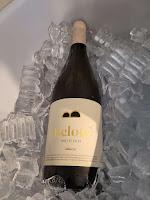
Bodegas Belote's goal is to restore rural heritage and preserve cultural memory which includes restoring winemaking in underground cellars with minimal intervention. According to the winery, "Caves are an inherent part of traditional architecture in Roales de Campos. Wineries dug in the slopes with a small slope where for more than 500 years the wines were made in a stable environment and at temperature constant throughout the year". The Belote D.O. León 2020 Albarin was crafted from vines planted between 2002 and 2006 in clay loam soil at 900 meters (2,953 ft.) above sea level. The wine was naturally fermented in clay vats and then rested on its lees for three-four months in the same vats. The wine had the expected weightiness with lovely floral and spice notes interspersed with deep creamy citrus.

As I mentioned above, the El Aprendiz I.G.P. Castilla y León Blanco 2024 (100% Albarin Blanco) was the first wine I tasted and assumed to be Albariño. And even its profile reminded me of the Galician grape with strong floral and tropical notes and abundant acidity. More herbaceous than saline. The grapes are sourced from organic vineyards in the southern area of the province of León. The twenty+ year old vines grow in poor sandy loam texture soils and experience hot and dry summers. Cool nights help retain that acidity. A fantastic wine.






