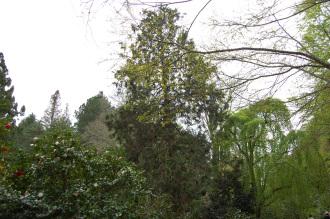
Chamaecyparis obtusa (04/04/2015, Kyoto Botanical Garden, Kyoto, Japan)
Position: Full sun to partial shade
Flowering period: Spring
Soil: Well drained, moist
Eventual Height: 35m
Eventual Spread: 8m
Hardiness: 6a, 6b, 7a, 7b, 8a, 8b, 9a
Family: Cupressaceae
Chamaecyparis obtusa is a slow growing evergreen tree with an upright habit. Its dark green adult leaves are scale like, up to 4mm long and arranged in flat sprays. Its trunk may achieve a diameter of 1.8m. The bark is reddish/ purplish and peels off in fibrous, vertical strips. This tree is monoecious and flowers in spring, the male flowers are red/ brown. The female cones are initially yellow/ green, maturing to brown, are up to 12mm across.
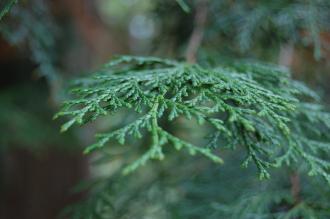
Chamaecyparis obtusa Leaf (04/04/2015, Kyoto Botanical Garden, Kyoto, Japan)
Chamaecyparis obtusa, commonly known as Japanese Cypress or Hinoki False Cypress, is native to Japan. Its should be noted the pollen of this tree is known to cause hay fever. This tree is one of the ‘Five Sacred Trees of Kiso’ in Japan.
The etymological root of the binomial name Chamaecyparis is derived from the Greek chamea ‘dwarf’ and kupeiros the ancient Greek name for the Cypress (ironically this is not a dwarf tree). Obtusa is derived from the Latin obtusum meaning ‘blunt’.
The landscape architect may find Chamaecyparis obtusa useful as an attractive evergreen specimen tree. It may also be planted and maintained as an effective evergreen hedge. This tree prefers a humid environment.
Ecologically Chamaecyparis obtusa is of little value to wildlife in the UK.
The Royal Horticultural Society has given many varieties of the Chamaecyparis obtusa cultivars their prestigious Award of Garden Merit.

Chamaecyparis obtusa Bark (04/04/2015, Kyoto Botanical Garden, Kyoto, Japan)
Chamaecyparis obtusa prefers moist, well-drained soils. It will tolerate most pH of soil.
Chamaecyparis obtusa requires little maintenance. This tree is very tolerant of pruning. Pruning should be carried out during the summer months, pruning should be restricted to the soft green growth and cutting the brown barked stems should be avoided.