A Nativity diorama inside an antique steamer trunk (part 2, crafting the terrain) | #LRCrafts - DIY Passion: if you can think it, you can make it
Some of you might remember the multi-year Christmas project my husband and I embarked on: transforming an old steamer trunk into a sprawling Nativity diorama.
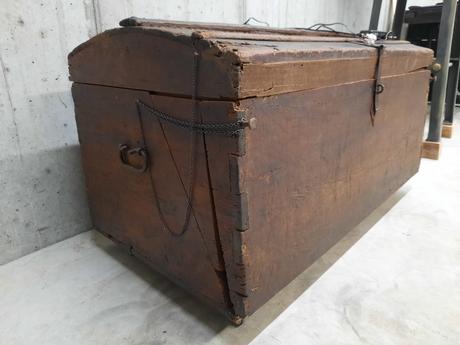
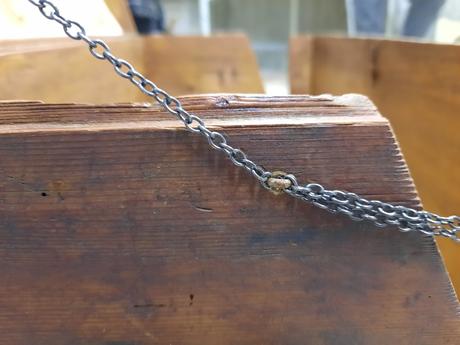
For those unfamiliar, let me catch you up. A few years ago, we began restoring the steamer trunk, which once belonged to my great-grandmother, with the vision of turning it into a grand Nativity scene. We finished the restoration just in time for Christmas 2022, and I detailed that phase in the first part of this series. The following year, in 2023, we dedicated our time to finding the perfect statues for the diorama. By 2024, we were finally ready to tackle the landscape.
Creating this miniature landscape has been a blend of various crafts: from sketching and constructing mock-ups of Bethlehem’s buildings, sculpting dunes, and crafting a fully removable, Roman-style road, to laying out space for hidden lighting and wiring. Each task was meticulous and deeply satisfying in bringing the scene to life.
Read on to discover all the details of this next phase of our multi-material, multi-year journey.
Dioramas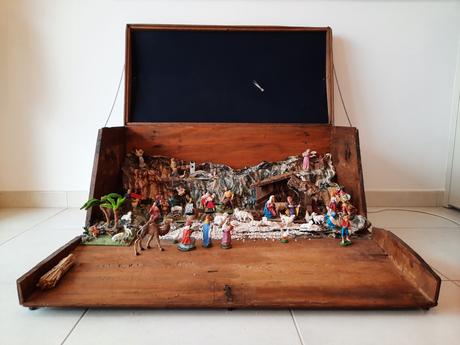




Click for the finished project detailed photos
Table of contents
Finding the statues
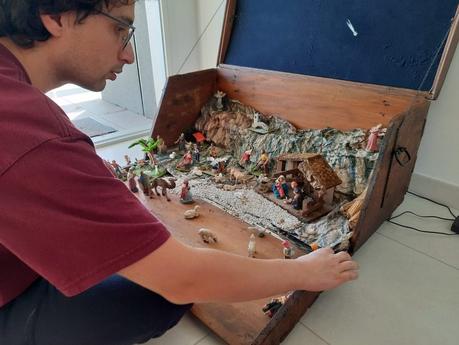
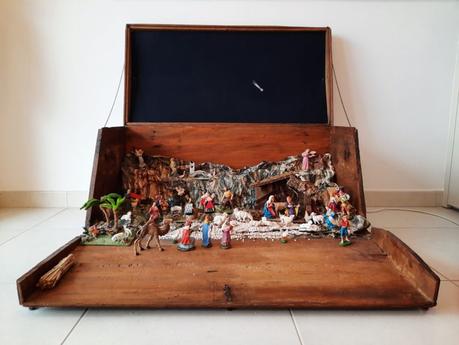
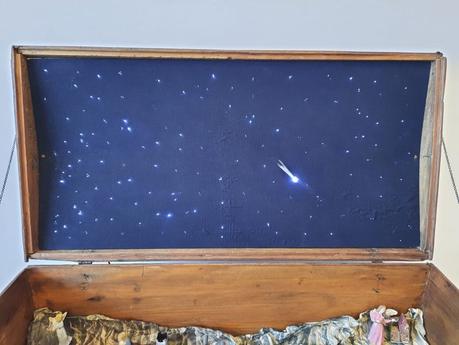
After completing the trunk restoration, we set up a simple Nativity scene inside it for Christmas 2022, using some of the old family statues I had inherited. Although they carried sentimental value, they had aged through multiple moves, and were slightly too large for the diorama we envisioned.
In 2023, we began the search for new statues, determined not to settle for the usual plastic store-bought figures. This project deserved something handcrafted, something unique. That’s when we discovered La Stele, a workshop specializing in sacred and Christmas sculptures. The family had been in the business for over a century, and each piece was hand-sculpted and hand-painted.
Visiting the workshop felt like stepping into a living tradition. The sculptor guided us through the collections, and we fell in love instantly with a series of resin statues that would be perfect for our diorama.
The planning and the mockup
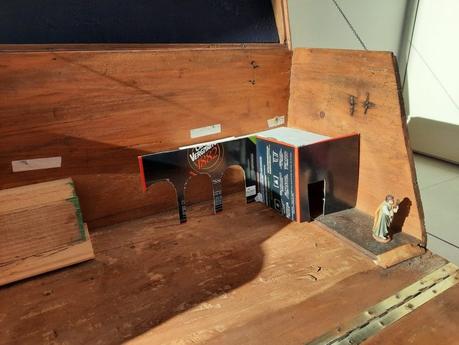
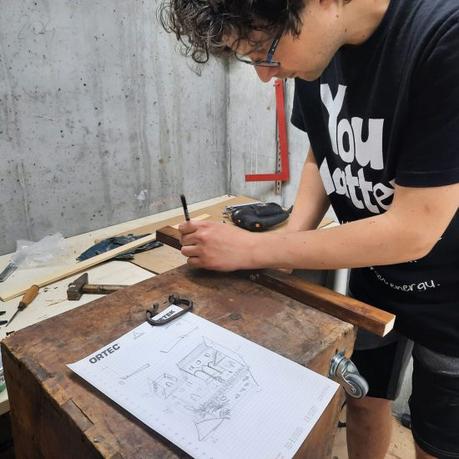
By Christmas 2023, these statues had found their place in our home, and we spent many evenings sitting together, admiring them, and brainstorming the landscape around them. With the trunk and statues on display for the season, my husband began the next phase: designing the buildings. Using the sketches he had made during the trunk’s restoration, he started building mock-ups from cardboard, crafting houses, stairs, and porches.
This was mostly to finalize the proportions and ensure everything would look balanced. While we didn’t aim for perfect scale accuracy, we wanted to achieve a sense of harmony between the figures and the setting, something that would feel right to the eye.
At the heart of the diorama is the inn, complete with the humble stable where Christ was born. The foreground would feature a desert scene, an oasis for the shepherds, and a road crossing through.

Making the terrain
The foundation
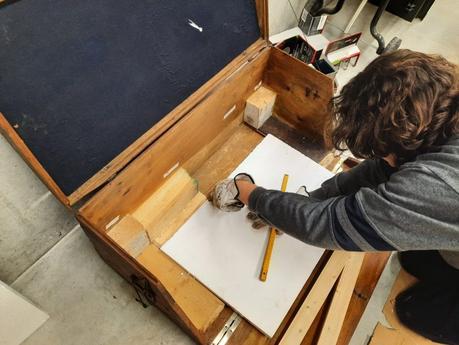
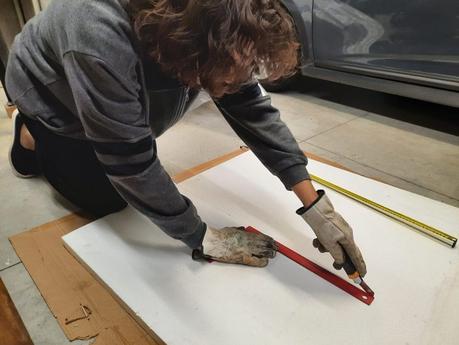

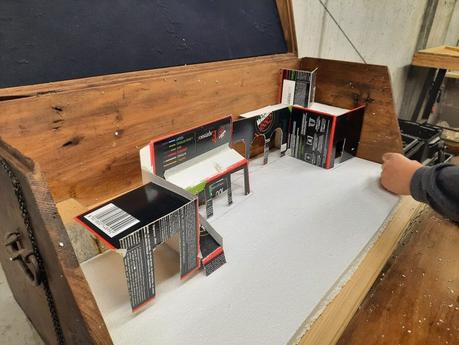
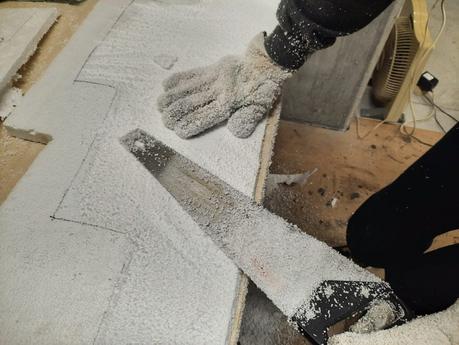
The first step in creating the landscape was sculpting the base from polystyrene boards.
To begin, my husband worked on ensuring the boards fit perfectly into the trunk. During the restoration, he had added wooden reinforcements, so sections of the polystyrene had to be carefully cut to accommodate them.
We laid the first board on the trunk floor, and with the cardboard mock-up buildings in place, we traced their outlines directly onto the polystyrene. We also marked additional details, such as the well we planned to place in the center of the main square in front of the inn, and the holes for the electrical wiring.
Since we decided to incorporate lighting as we did for the starry sky in the lid – for fires, house lamps and ambient glow – these holes were strategically placed to ensure we could discreetly run the wires. Every flickering flame and glowing window needed to feel integral to the scene, so careful planning was essential. We didn’t want conspicuous electrical wires ruining the magic and atmosphere of the diorama.
Next, my husband began refining the polystyrene boards, a process that involved constant testing and adjustment: placing the board into the trunk, checking the fit, and then removing it to further sculpt and shape the land. His attention to detail ensured the landscape took shape naturally, following the contours we envisioned, while fitting neatly inside the trunk.
Of course, this was just the foundation: the polystyrene would eventually be covered, textured and painted to achieve the final look we were aiming for.
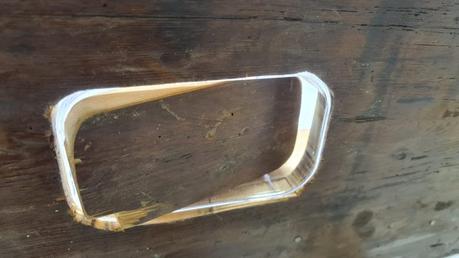
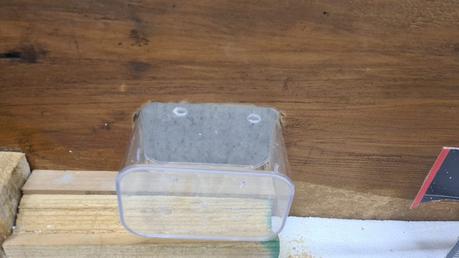
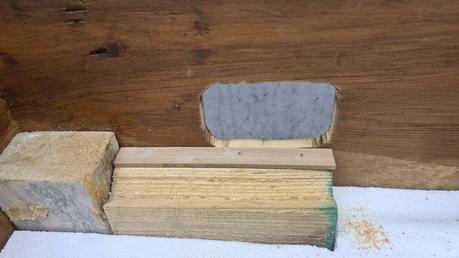
One key modification my husband made early on was cutting a small rectangle in the back of the trunk. Into this space, he installed a transparent box to house the electric equipment. This allowed us to run all the wiring neatly out of sight. Once the buildings were in place, this section would be hidden from view, seamlessly integrated into the diorama’s design.
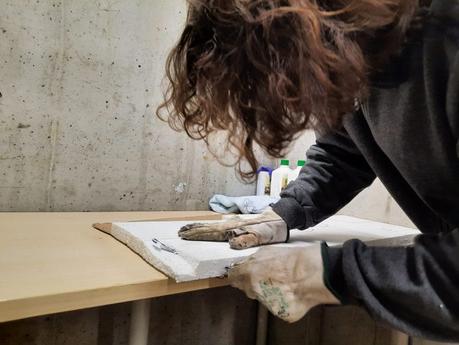
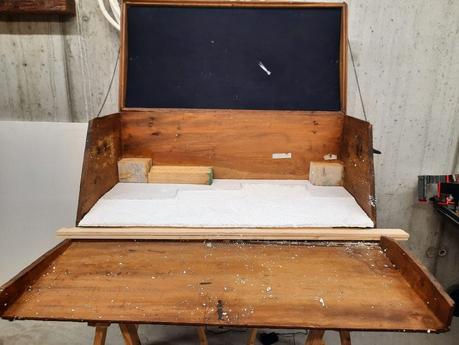

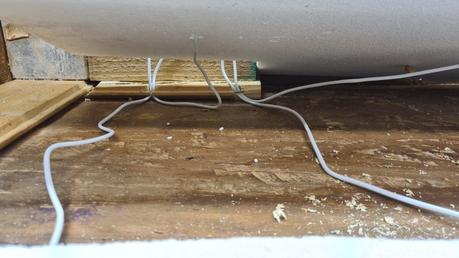
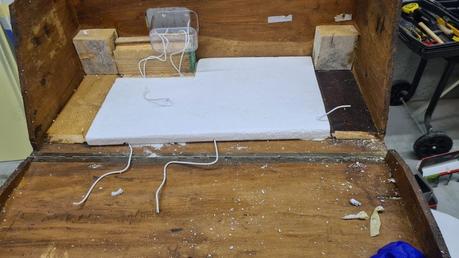
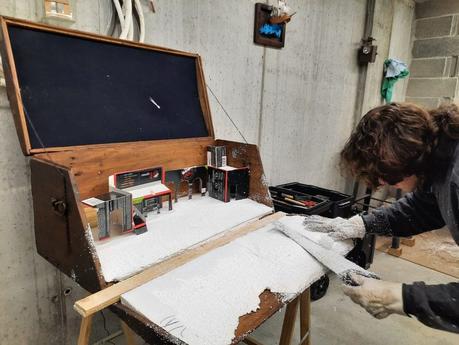


The same sculpting process was repeated for the front section of the trunk, where we envisioned the desert dunes and an oasis. This part of the landscape lay on the front panel of the trunk, which we had modified during restoration to allow it to open and lie flat, doubling the available surface for the diorama.
With the board in place, my husband sculpted the dunes, carefully shaping the land to capture the rolling desert terrain we had imagined. We also left space for a future lake, which we plan to create using epoxy resin, adding a reflective, realistic water feature to the scene. This section, too, required wiring for lights, so we pierced holes in the appropriate places to accommodate them.
Another significant element was the Roman road. Both for aesthetics and practicality, we designed it to be removable so it wouldn’t interfere with the hinge that allows the front side of the trunk to open and close. When the trunk is closed for storage, everything fits neatly inside. But once opened, the road conceals the hinge and the scene expands to reveal the full diorama. For now, we placed a wooden board cut to the same shape and size as the future road, postponing its construction to a later phase.
The cement coating
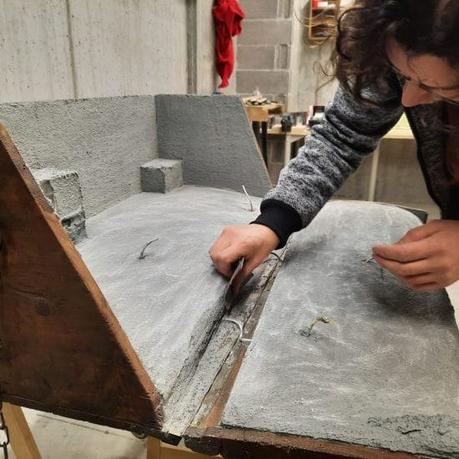
The next step in refining the landscape was adding a thin layer of cement to bring cohesion and texture to the terrain. We used the cement both to glue the polystyrene boards together and to sculpt the surface of the landscape, giving it a uniform finish across the entire scene.
Having worked with cement before on projects like vases and sculptures, we were confident in our choice. The texture of the cement we selected was ideal for simulating the dry, sandy expanses of the desert. In certain areas, we smoothed it out to suggest well-trodden paths or floors, while in others, we intentionally roughed it up more than it might naturally be to evoke rocky terrain or rugged hills.
Before cementing the surface, we first needed to ensure all the wiring was in place. We carefully threaded the wires through the pre-cut holes, making sure they came out exactly where they were needed to light the fires, houses, and other elements. With everything set, we could then proceed to cover the terrain.
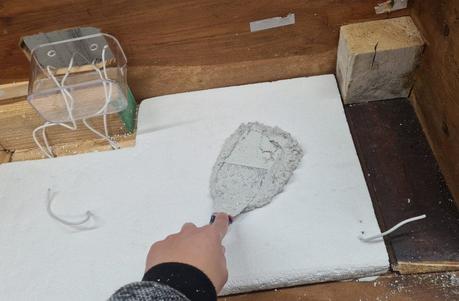
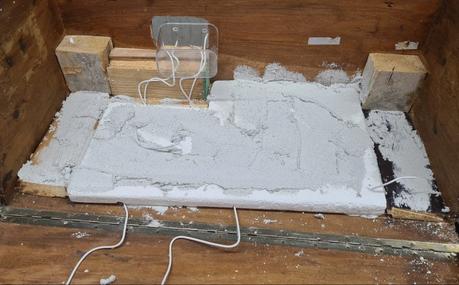
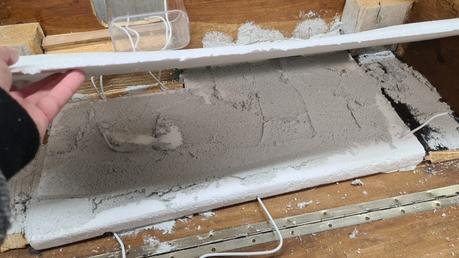
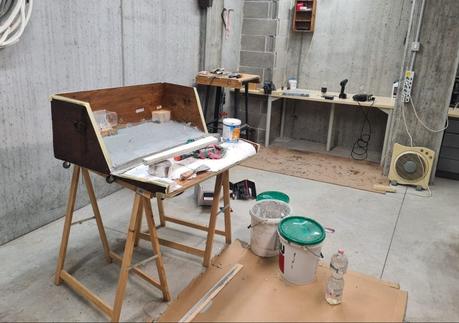

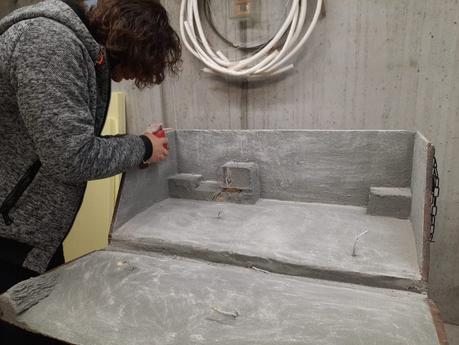


My husband also applied a super-thin coat of cement to the inner walls of the trunk, where we plan to paint the night sky behind the buildings, creating a continuous backdrop that would flow seamlessly towards the starry sky on the trunk’s lid.
Once the cement dried, we moved on to a crucial step: sanding. My husband smoothed out areas that needed to be even and removed any excess thickness in places where the cement had built up too much. We wanted to ensure the landscape was ready for painting and that it would match the vision we had for the scene.
We also checked that the trunk could still close properly, and that the removable Roman road fit neatly into place without disrupting the diorama’s overall layout.
Constructing the Roman road
The next phase was constructing the Roman road, which turned into an unexpectedly delightful project thanks to a lucky flea market find. While browsing one day, we stumbled upon a vintage kit from the 1980s meant for building a scale model of a Medieval church. The kit was complete with loads of tiny real bricks, perfect for building our Roman road and saving us the long, tedious task of baking and shaping bricks ourselves!
The base for the road was the same wooden board we had previously used to check the size and placement in the trunk. To mimic the classic Roman road design, we gave the board a slightly domed surface, ensuring the road was higher in the middle. This way, the roads built by Roman engineers let rainwater flow down the sides.
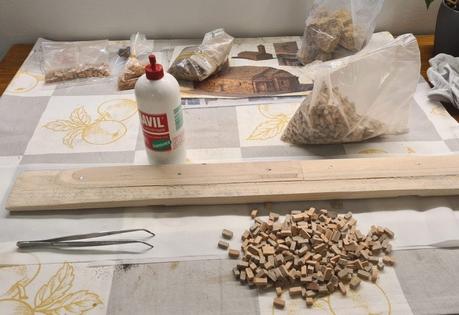

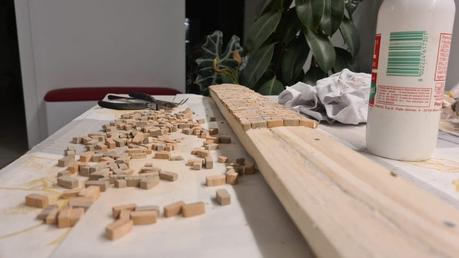


One winter evening, my husband set to work, meticulously placing each tiny brick one by one using vinyl glue and a pair of tweezers. Normally, tasks that require patience fall to me, but this time, he surprised me by finishing the entire job in just about an hour! The precision with which he worked was impressive, and the road took shape beautifully.
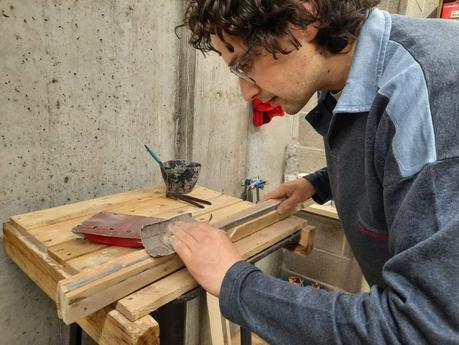
Once the bricks were laid, he lightly sanded the surface to even it out and give it the worn, well-used look we envisioned. When we placed the road into the reserved spot in the diorama, it fit perfectly, enhancing the overall scene with its realistic texture and history-inspired design.
Painting
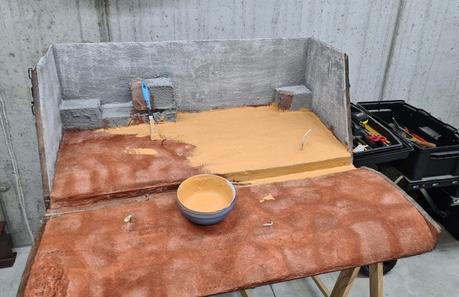
The next step in bringing the landscape to life was painting the terrain. However, after a small test, my husband quickly realized that a simple coat of paint wouldn’t give us the depth or texture we were after. To truly reinforce the sandy feel he had begun with the cement, he needed something extra: surprisingly, toilet paper turned out to be the answer!
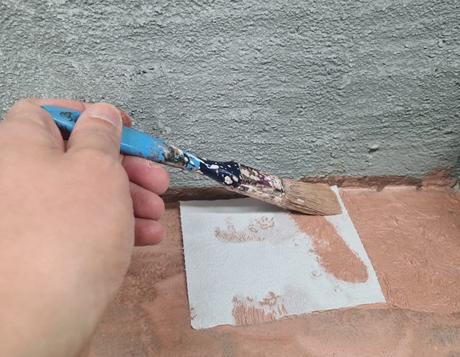
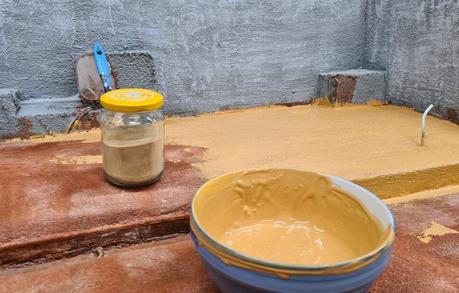
He experimented with different materials like paper mache, kitchen paper and newspapers, but found that toilet paper provided the perfect texture. He mixed vinyl glue with ochre acrylic paint and used this to apply a thin layer of toilet paper across all the sandy areas. The result was a subtle, uneven surface that added to the realistic look of the desert terrain.
Once the coat dried, he prepared a custom acrylic paint mix to match the natural tones of desert sand (he even compared it to real desert sand) and painted the entire surface. Finally, our sandy terrain was complete!


Preparing for the next phase
Now that autumn has arrived and Christmas is fast approaching, we’ve decided to pause the project for the year. As we did last year, we’ll display our statues and admire the progress we’ve made, all while continuing to plan the next phase.
The upcoming steps will be both fun and challenging: constructing the buildings, crafting the oasis palm trees, creating the intricate miniature details of the inn and stable, and, of course, installing the lights.
This slow, deliberate crafting process will likely take a few more years to complete, but we’re enjoying every step of the journey. While I can’t wait to see the final diorama, I already know I’ll miss these long days spent planning and working together.
What do you think of the project so far? What would you like to see next? Do you have any suggestions? Let us know in the comments, and stay tuned as we continue this labor of love!
Follow our journey
A Nativity diorama inside an antique steamer trunk (part 2, crafting the terrain)
A Nativity diorama inside an antique steamer trunk (part 1, restoration)
by Rici86.