


Feb. 18th The iPad and TV presenters; also, covering Middle East protests
There are 0 comments (Add your thoughts)
Email or Print this article.
Update #3, Sunday, Feb. 20, 10:38 Paris EST
TAKEAWAY: It is now the gadget of choice for many television presenters in the US: the iPad. PLUS: Throughout the weekend, we take a look at how Middle East newspapers cover the continuing unrest and protests there.
Covering the Middle East protests
We watch with interest how journalists approach the protests that are becoming part of the daily dose of news coming from the Middle East following the Egyptian crisis that brought the exit of Mubarek a week ago. In the past two days, the main media focus has been on Bahrain, where security forces have opened fire on anti-government protesters, witnesses and opposition activists say.
In an exchange of emails about the subject with William Powers, author of Hamlet’s BlackBerry and a constant media observer, we were discussing, very specifically, how a Bahrain editor took a different stand on the protests during an interview with the BBC. Here is William’s take:
“
I’ve been thinking about the establishment newspapers of the Arab world and what an uncomfortable position some of them must be in. Heard the editor of a Bahrain daily on the BBC this morning and he was beside himself about what he argued is a pronounced bias among foreign reporters in favor of the protesters, who he said represent just a tiny minority of the population. Maybe he’s right, but in a way, it was odd to hear a journalist taking that particular position so strongly, given everything that’s happening. It seemed to confirm the stereotype of newspapers as bastions of old-guard thinking, while Twitter and Facebook are at the barricades.“
What are the limits of what these editors can and cannot publish?
We ask Nayla Tueni, publisher of Lebanon’s An Nahar:
With increasing internet usage in the region, social media has become an indisputable source of information and a major mobilizing platform for certain groups.
It is true that leading media agencies are using social media as a main source of news - which happens to be sometimes much faster than reporters. Nevertheless, good journalism requires trusted sources. In a world where information flows from everywhere, it is our duty to verify the accuracy of the information by giving the reader the exact news and the exact source. In moments of revolutions and possible drastic changes in a country, I don’t envy journalists and editors used to blindly praising the ruler.For instance, what would a public news agency report in critical period of time where things could totally change? What would it report following a change? How would it report an ousted ruler - after having applauded his ‘achievements’ and not recognizing a single failure throughout years? Its credibility - can it be rebuilt? I strongly doubt.
From here the importance of being a free and credible journalist defending a cause - and not a person - regardless of what is happening around him.
Here is a selection of front pages from leading newspapers in the Middle East region:
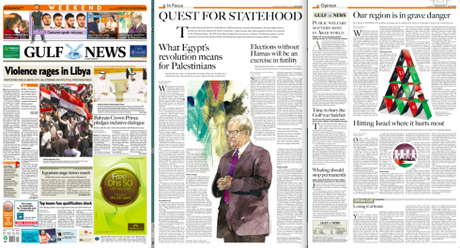
UAE’s Gulf News, published in Dubai: trio of pages sent by Design Director Miguel Gomez
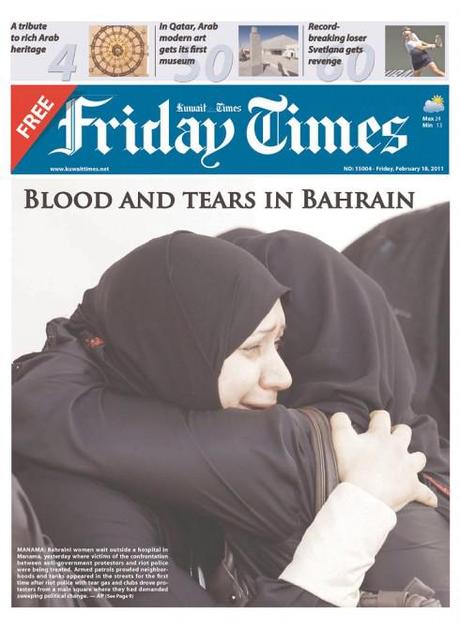
Kuwait’s Kuwait Times
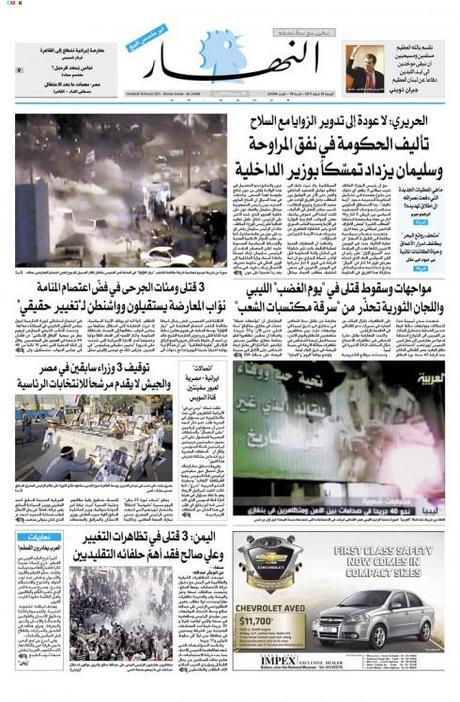
Lebanon’s An Nahar
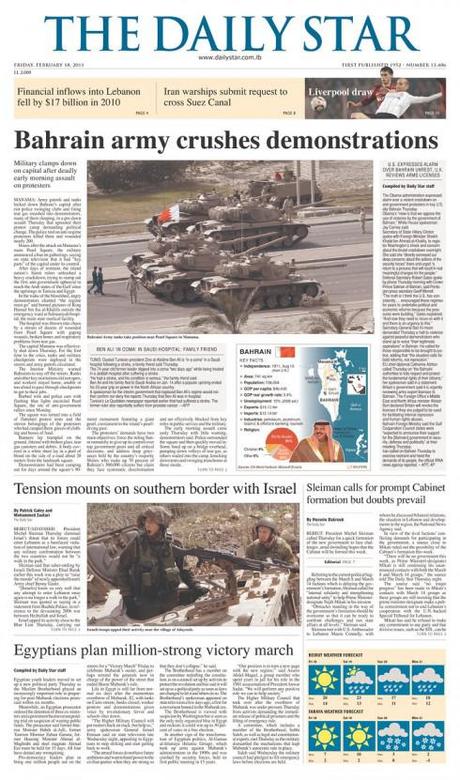
Lebanon’s The Daily Star
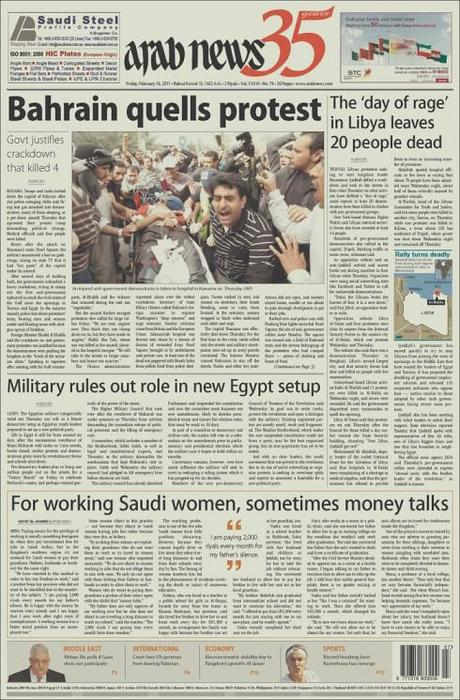
Saudi Arabia’s Arab News
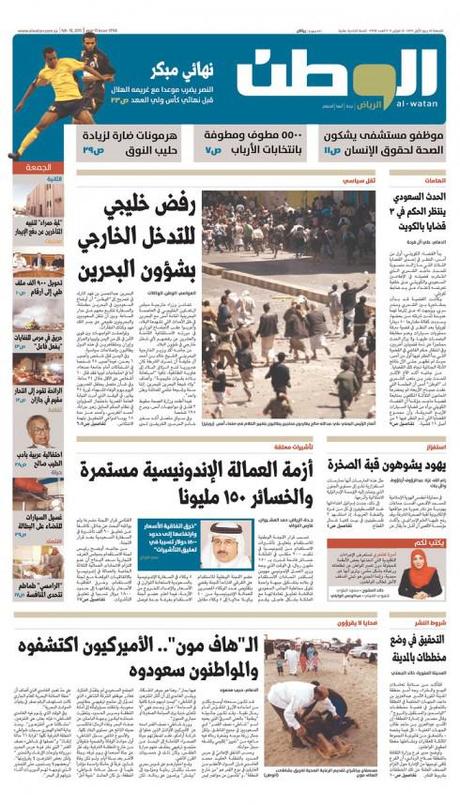
Saudi Arabia’s Al Watan
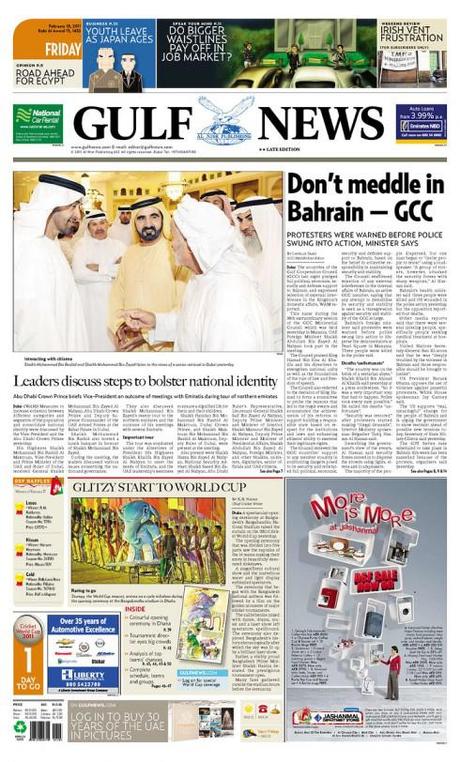
UAE’s Gulf News
Here is a selection of front pages from leading newspapers in the Middle East region:
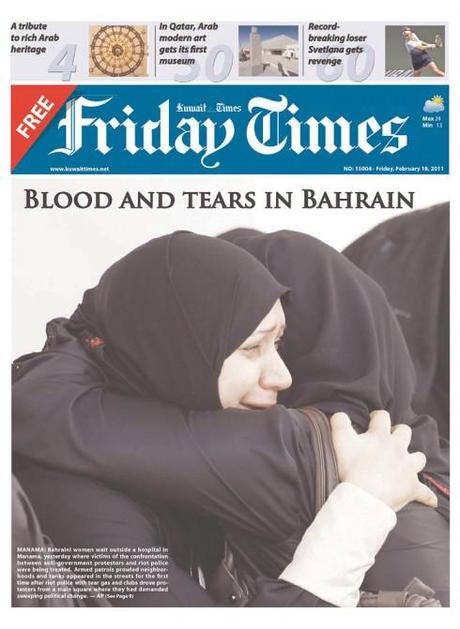
Kuwait’s Kuwait Times
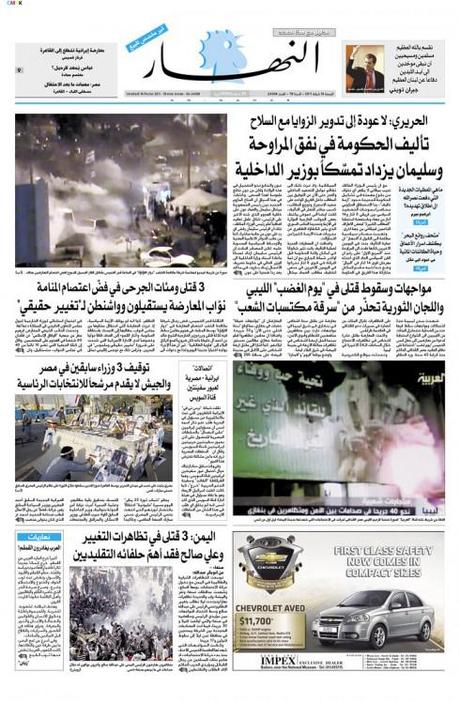
Lebanon’s An Nahar
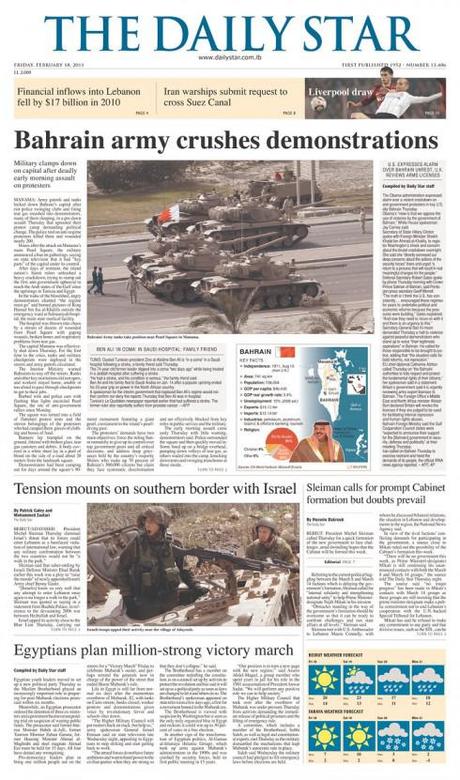
Lebanon’s The Daily Star
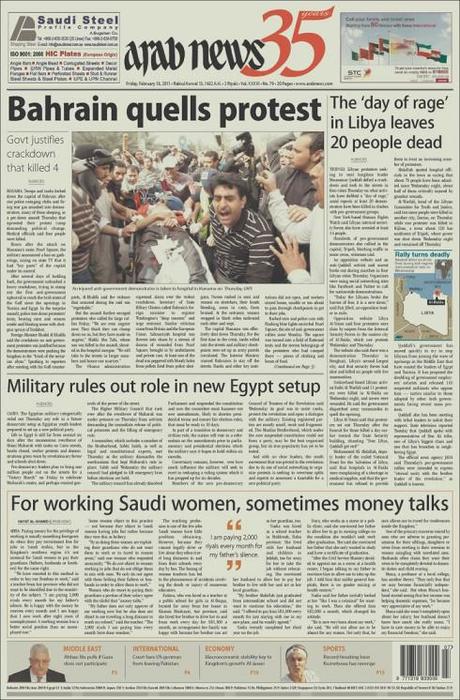
Saudi Arabia’s Arab News
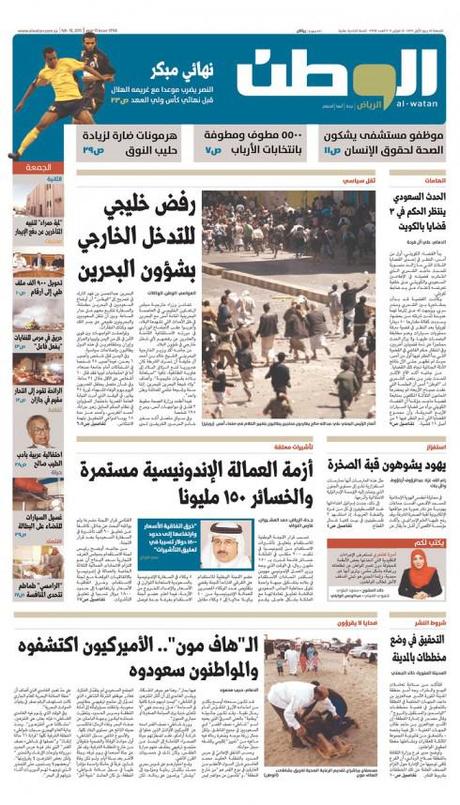
Saudi Arabia’s Al Watan
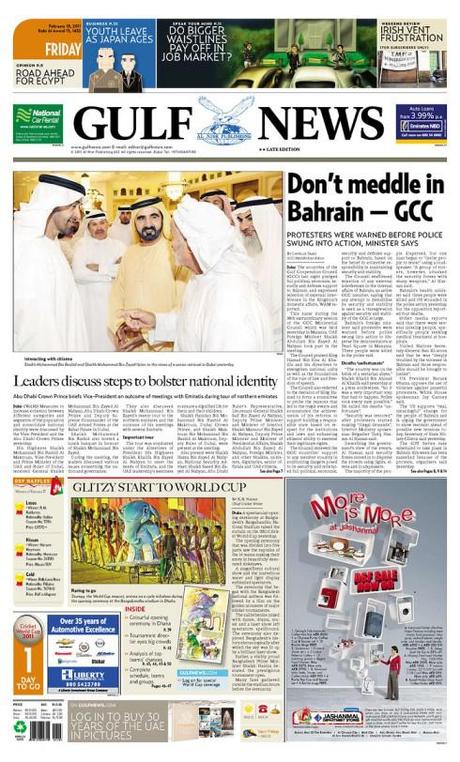
UAE’s Gulf News
The perfect prop for those TV presenters
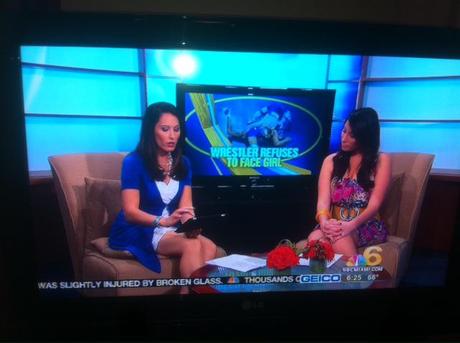
I wake up in Miami, Florida, ready to start an 11-country tour that will put me on the road for about six weeks. First sight, even before I stare at a beautiful sun rising over the palm trees here: one of the presenters on the early NBC Live Miami news show is holding up an iPad as she reads from it. It is not the first time I have seen an iPad in the hands of a TV presenter. CNN’s weatherman Guillermo Arduino is seen holding his iPad as he hosts World Report.
The iPad obviously provides a much closer, comfier “teleprompt” for the presenters. In one case, when the regular video segment did not operate properly, I saw a presenter tell the cameraman zoom in on her iPad, where the video was shown.






