


Coronary Artery Disease (CAD) is a modern disease. Everyone knows that. With industrialization, the advent of the car, the increase in dietary sugar and fat, the more sedentary lifestyle, the movement of populations from the farms to the city, and the stresses of modern life, the incidence of CAD has exploded in the past 100 years. For many years it has been, and remains, the major killer of adults in the US.
But is CAD actually more prevalent now or simply more easily recognized? Obviously the treatment of this disorder is a modern invention since bypass surgery began in the 1960s and angioplasty and coronary stents followed in the 1980s and 1990s. These life-saving interventions are very new.
But is CAD really that new? Was it present but unrecognized for many years before we really understood what a heart attack was?
The answer is yes.
A new study from one of my colleagues Dr. Gregory Thomas was reported in a recent American College of Cardiology meeting. As part of the study, CT scans were performed on 44 Egyptian mummies. Astoundingly, nearly half of them had significant calcifications in their blood vessels–the coronary arteries, carotid arteries, and the other more peripheral arteries–indicating the presence of CAD and Peripheral Artery Disease (PAD). Also the average age at death was only 38 years and female mummies were just as likely to have evidence for CAD as were their male counterparts.
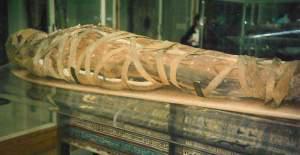
These findings seem to suggest that something other than modern civilization is at the root of coronary disease. The ancient Egyptians ate more grains, vegetables, and fruits and consumed much less meat than modern humans, so dietary considerations did not seem as important. At least in this population. And I don’t think Cleopatra and her subjects had gyms and aerobic studios and I doubt they exercised just for the sake of exercise. All of this points to the fact that perhaps CAD has more to do with genetics than anything else. This isn’t exactly a new belief as we have known for years that a strong family history of CAD puts a given individual at a higher risk for this disease.
What does this mean for writers? If you set your stories in Ancient Egypt, it opens up more avenues for you to explore when creating your characters. You could easily have a 30 or 40 year old male, or female, who suffered from CAD. Of course, he would not know that what he suffered from was CAD but he might have at least rudimentary knowledge that chest pain and shortness of breath were not good things. He might even know that the development of these symptoms was often followed by death in fairly short order. This feeling of “impending death” could easily alter your character’s activities, beliefs, and confidence. Not to mention scare the hell out of him.
Other symptoms for your character would include fatigue, heartburn or indigestion (symptoms that seem to be GI in origin but are often the symptoms of CAD), palpitations, dizziness, and even fainting. Your character could also suffer from peripheral vascular disease, which would cause cramping in his lower legs with walking or climbing stairs. He could be prescribed a host of herbs, poultices, inhalants, and incantations and rituals to ward off the evil spells or foul humors that had obviously invaded his body. Such was the state of Egyptian medicine during its Dynastic Period.
So while you’re creating characters for your Ancient Egyptian historical fiction, consider giving one of them cardiovascular disease. It’s not only possible but indeed likely that your character could suffer from this problem.







